Multidisciplinary Analysis of Educational Platforms: The Integrated Role of Educational Technology, IT, School Management, and Teaching
Analysing and choosing educational platforms is essential to ensure they are aligned with the curriculum, accessibility and data management.

The previous article, “ET & IT - Digital Synergy in Schools”, highlighted the ongoing alignment between the two areas and the positive results it brings to everyday school life. Technical and pedagogical dialogue supports the selection of safe digital resources, ensuring solutions that are viable from both a technical and a pedagogical standpoint.
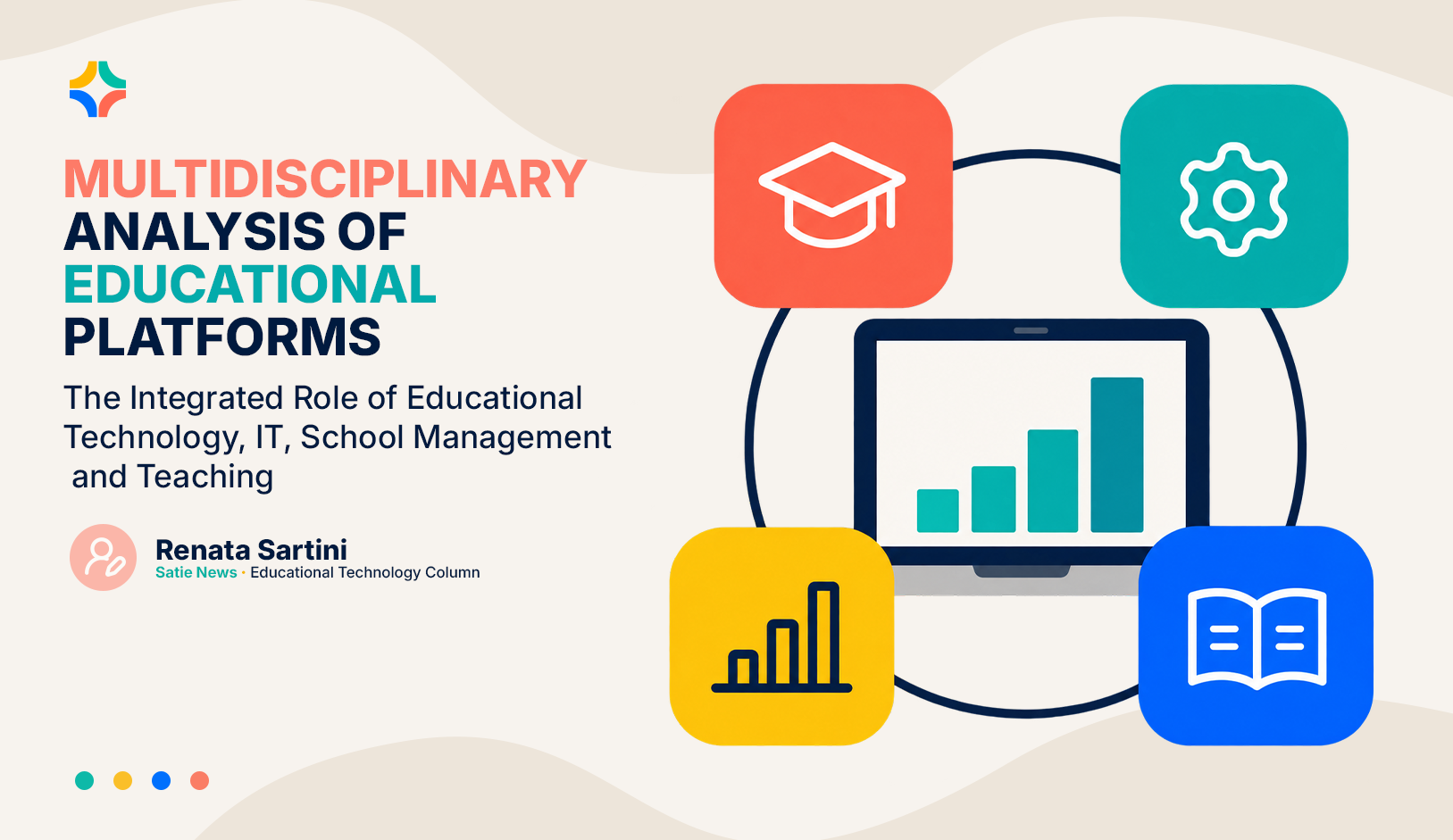
Selecting and implementing digital learning platforms — such as a Virtual Learning Environment (VLE) or a Learning Management System (LMS) — requires a critical, multidimensional approach that goes far beyond basic operational specifications. When the choice is made in isolation by a single department, there is a risk of adopting tools that do not meet teaching needs or that create gaps in infrastructure and management. Based on technical guidelines and academic studies, an effective evaluation of educational platforms depends on collaborative work across four strategic fronts: Information Technology (IT), Educational Technology (ET), School Management and Teachers.
Perspectives that ensure the successful use of platforms:
Educational Technology (ET): usability, accessibility and inclusion
ET bridges the technical tool and the user experience, focusing on inclusion and navigation:
- Intuitive interface and ergonomics: ease of navigation for different profiles (students, teachers, school leaders and families), ensuring training and guidance for users with varying levels of digital literacy;
- Universal Design for Learning (UDL): checking for universal accessibility features, such as screen reader support, captions, colour contrast adjustment and keyboard navigation;
- Responsiveness and critical analysis of the platform: ensuring proper performance on multiple devices (laptops, Chromebooks, tablets, mobile phones) under different connection conditions, together with critical reflection to prevent standardised algorithms from ignoring regional particularities or widening inequalities of access;
- Continuing professional development alongside the pedagogical coordination team: ongoing training programmes for teaching staff.
Information Technology (IT): Infrastructure, Security and Integration
IT is responsible for ensuring technical robustness, stability and information security in the digital environment:
- Stability and performance: assessing server reliability, page loading speed and capacity to support simultaneous access, as well as responsive technical support channels.
- Security and data protection (LGPD): ensuring security and protection in compliance with Brazil's General Data Protection Law (Lei Geral de Proteção de Dados – LGPD), safeguarding the confidentiality, privacy and protection of students' and teaching staff's personal information;
- Integration and open standards: checking the platform's ability to integrate with other systems already used by the institution (such as academic registry systems, Google Workspace, Microsoft Teams, Canva or Moodle).
School Management: Sustainability, Indicators and Support
School management (coordination and leadership) assesses institutional feasibility, strategic monitoring and long-term impact:
- Data analysis (Learning Analytics): access to dashboards with real-time indicators on attendance, engagement and assessment performance.
- Cost-benefit and financial sustainability: weighing the economic feasibility of the project, considering licensing, support, hosting and customisation costs compared with open-source models such as Moodle.
- Curriculum alignment: analysing whether the tool is consistent with the guidelines of Brazil's National Common Curricular Base (Base Nacional Comum Curricular – BNCC) and with the school's Political-Pedagogical Project (Projeto Político-Pedagógico – PPP).
Teachers: Curriculum Alignment, Autonomy and Teaching Practice
Teachers assess whether the technology serves learning and mediation:
- Teacher autonomy and agency: planning, organising materials and personalising learning pathways;
- Active methodologies and interactivity: analysing diverse approaches (blended learning, project-based learning, gamification, forums, chats and videoconferencing) and the personalisation of the pace of learning;
- Monitoring and formative feedback: availability of resources for continuous assessment and immediate feedback to students, promoting meaningful learning.
In conclusion, the effectiveness of choosing an educational platform depends on the integration of technology, pedagogical intentionality and digital competences, consolidating the use of digital resources in practice as support for developing learning that is better aligned with students' characteristics.
Discover Satie
Satie is a data intelligence layer for education that connects information from the different systems a school already uses, helping leaders turn scattered data into a more integrated view for decision-making.
Want to understand how that connection could work in your school? Discover Satie.
Discover Satie